



A regas refills the refrigerant in your air conditioner. in Melbourne it is indicatively $200 to $450 for a split system and $400 to $900 for a ducted system. The catch: refrigerant does not get used up. If your system is low, it has a leak, and a regas without fixing that leak just buys you a season.
That last point is the one most people have never been told. They book a regas in December, the air runs cold again, and by the next summer it is blowing warm and they book another one. Each time they pay for refrigerant that is slowly escaping through a crack nobody looked for.
This guide explains how to tell if your system is actually low, what a proper repair costs, the extra problem with older R22 systems, and who is allowed to do the work.
Refrigerant Does Not Get Used Up
An air conditioner moves heat by pumping refrigerant around a sealed loop of pipes between the indoor and outdoor units. It is not fuel. Nothing burns it, nothing consumes it, and a system in good order should hold the same charge for its whole life.
So “it needs a top up every year” is not maintenance. It is a symptom. Somewhere in that loop there is a leak, usually small: a flare joint that has worked loose, a pinhole in a copper pipe, a corroded coil. Our repair cost calculator puts it plainly: a regas without finding and fixing the leak will simply leak out again.
The right job has three steps. Find the leak. Fix it. Then recharge the system to the weight on its label and check it holds.
Signs Your Air Conditioner Is Low on Refrigerant
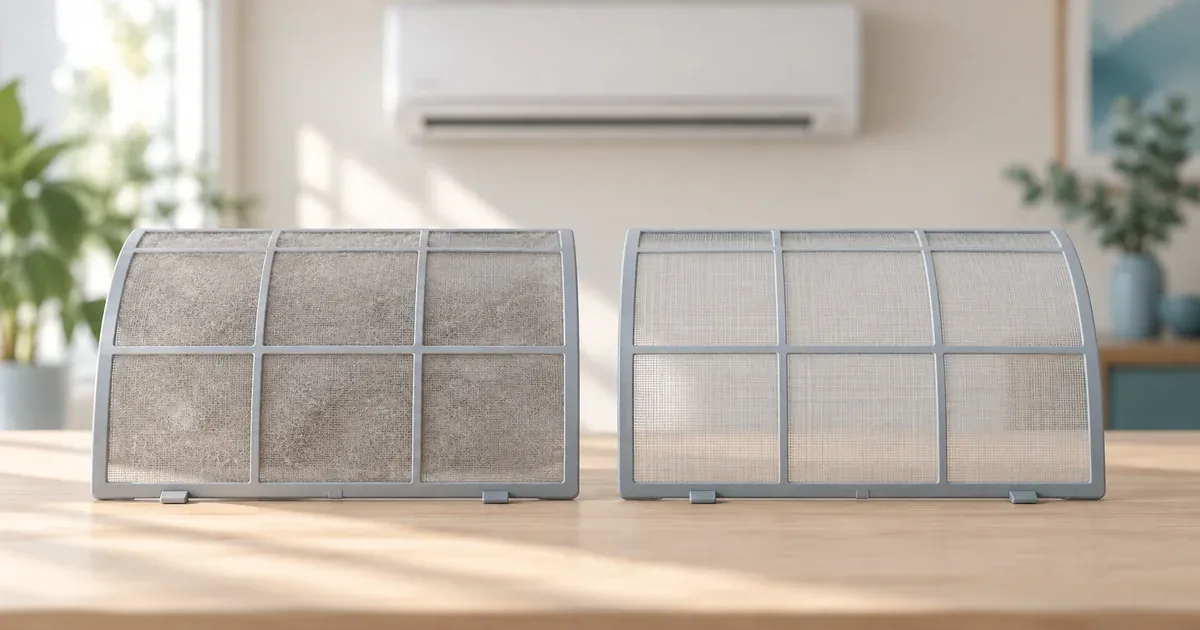
Low refrigerant shares symptoms with simpler faults, so check the easy things first. A dirty filter can cause most of what is in this table.
| What you notice | Could also be | What to do |
|---|---|---|
| Blowing cool, not cold, and getting worse each summer | Dirty filter or outdoor coil | Clean the filters. If nothing changes, book a diagnosis |
| Ice on the indoor coil or the copper pipes outside | Badly blocked filter or a fan fault | Switch it off and let it thaw. Do not chip the ice |
| Runs for hours and never reaches the set temperature | Unit too small, or a very hot day | Compare with how it coped last summer |
| Hissing or bubbling from the pipes | Normal noises at start up | Note when it happens and tell the technician |
| Water dripping inside after the ice melts | Blocked drain | See our guide to an air conditioner leaking water |
If the filters are clean and the outdoor unit has clear air around it, and it still is not cold, the refrigerant charge is a likely suspect. Our guide to why an air conditioner stops cooling covers the other causes, and the one on an air conditioner leaking water inside explains the melting ice.
What a Regas Costs in Melbourne
These are the indicative ranges from our live repair cost calculator. They are not a quote. Access, the refrigerant type and what the technician finds all move the number.
| Job | Indicative cost | Note |
|---|---|---|
| Regas, split system | $200 to $450 | Recharge only |
| Regas, ducted system | $400 to $900 | Larger charge, harder access |
| Leak find and repair | About $300 to $700 more | The part that stops it happening again |
| Failed compressor | $900 to $2,000 | Often the point where replacement makes more sense |
Add the leak repair to the regas and a proper fix on a split system can land somewhere around $500 to $1,150. That is more than a top up, and it is still cheaper than paying for a top up every summer for five years.
Our own callout starts from $150 including diagnostics, and you get the repair price before any work starts.
Running Low Again This Summer?
Tell us the brand, roughly how old the system is and when it last had gas. We will find out why it is low before we refill it.
The Extra Problem With Older R22 Systems
Look at the label on your outdoor unit. It names the refrigerant, usually R22, R410A or R32. Most systems installed in Australia since about 2010 use one of the newer two. If yours says R22, read on.
R22 damages the ozone layer, and Australia has been phasing it out for years. The federal environment department’s R22 factsheet explains the timetable: new R22 equipment can no longer be made or imported, existing systems can still be serviced, and bulk imports of the gas itself are being wound down, ending in 2030, after which servicing relies on recovered refrigerant.
What that means for you:
- You do not have to replace a working R22 system. If it is cold and quiet, leave it be and keep it serviced.
- Regassing it costs more than a newer system and will keep getting harder, because the supply is shrinking.
- A system can only be charged with the refrigerant it was built for. You cannot top up an R22 unit with R32.
So an R22 system with a leak is usually the moment to price a replacement beside the repair. Our repair or replace calculator weighs the age of the system against the repair cost. It uses typical lifespans of about 12 years for a split and 15 for ducted reverse cycle, and many R22 units are well past both.
Who Is Allowed to Regas an Air Conditioner
Not you, and not a handyman. The Australian Refrigeration Council, which runs the national licensing scheme, says anyone who installs, services or repairs an air conditioner must be a licensed technician. Businesses that buy and handle refrigerant need their own authorisation as well.
The ARC lets you check whether a technician or business is licensed through its Look for the Tick search. Ask for the technician’s licence number when you book. It takes ten seconds and rules out the cheap backyard regas that leaves you worse off.
Regas, Repair or Replace?
A rough way to think about it, before a technician has looked:
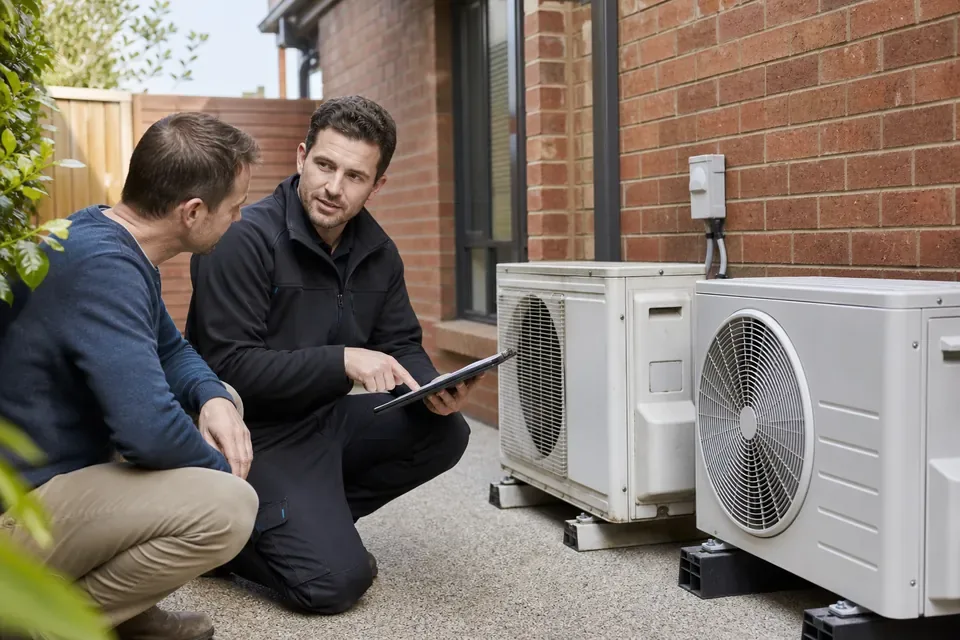
- A newer R32 or R410A system, a single leak at a joint: find it, fix it, regas. Usually well worth it.
- A system that has needed gas two summers running: the leak was never fixed. Insist on a leak find this time.
- An R22 system with a leak: price a replacement beside the repair before you decide.
- A failed compressor on a system over ten years old: replacement is usually the better spend.
We will give you the repair price and, where it makes sense, a replacement price on the same visit, so you are comparing real numbers rather than guesses.
Questions About Air Conditioner Regas
How often does an air conditioner need a regas?
Never, if it has no leak. Refrigerant runs in a sealed loop and is not used up. A system that needs gas has a leak, and it should be found and fixed before the regas, or the new gas will escape too.
How much does an air conditioner regas cost in Melbourne?
Indicatively $200 to $450 for a split system and $400 to $900 for a ducted system, plus about $300 to $700 to find and repair the leak. Those are ranges from our repair cost calculator, not a quote.
Can I regas my own air conditioner?
No. The Australian Refrigeration Council says air conditioner service and repair must be done by a licensed technician. Use one, and check their licence on the council’s Look for the Tick search.
Is it worth regassing an old R22 air conditioner?
Sometimes, if the leak is small and the rest of the system is sound. R22 is being phased out and is getting harder to buy, so for an older system with a leak, compare the repair with a replacement first.
Can R32 be put into an R22 system?
No. A system must be charged with the refrigerant it was designed for, which is shown on the label of the outdoor unit. Mixing refrigerants or substituting one for another is not a fix.
If the system is old enough that you are thinking about a new one, our pages on split systems and the split system installation cost calculator are a good place to start. And to keep a healthy system that way, see how often to service an air conditioner.