



Should you buy Australian made or Japanese refined? It is one of the most common questions we get, usually framed as ActronAir versus Daikin. We install and service both across Melbourne, so here is the straight answer from the people who see how each performs in local homes year after year.
The quick answer
Choose ActronAir if you are buying a ducted system, your home cops the full force of summer, or room by room zoning matters to you. It is Australian owned and engineered for exactly our conditions. Choose Daikin if you want the widest range of wall splits, air purification for an asthma or allergy household, or the reassurance of the world’s largest air conditioning manufacturer. Both are quality choices we stand behind with our 7 year installation guarantee.
ActronAir vs Daikin at a glance
| ActronAir | Daikin | |
|---|---|---|
| Origin | Australian owned, engineered for Australian conditions for over 40 years | Japanese, world’s largest air conditioning manufacturer |
| Extreme heat | Wide operating range, holds capacity in heat waves | Strong, with premium models rated for high ambient temperatures |
| Ducted zoning | NEO individual zone control on Advance, up to 8 zones and 16 sensors | Daikin AirHub in 4-zone or 8-zone versions |
| Wall splits | Serene S2 series | Lite, Cora, Alira X and US7, the widest range |
| Air quality | Quality filtration | National Asthma Council approved, active purification on premium models |
| Warranty | 5 year manufacturer warranty | 5 year manufacturer warranty |
| Installed price, 2.5 kW split | Around $2,000 to $2,600 | Around $2,000 to $2,600 |
| Ducted whole home | From around $13,000 | From around $12,000 |
The case for Australian made
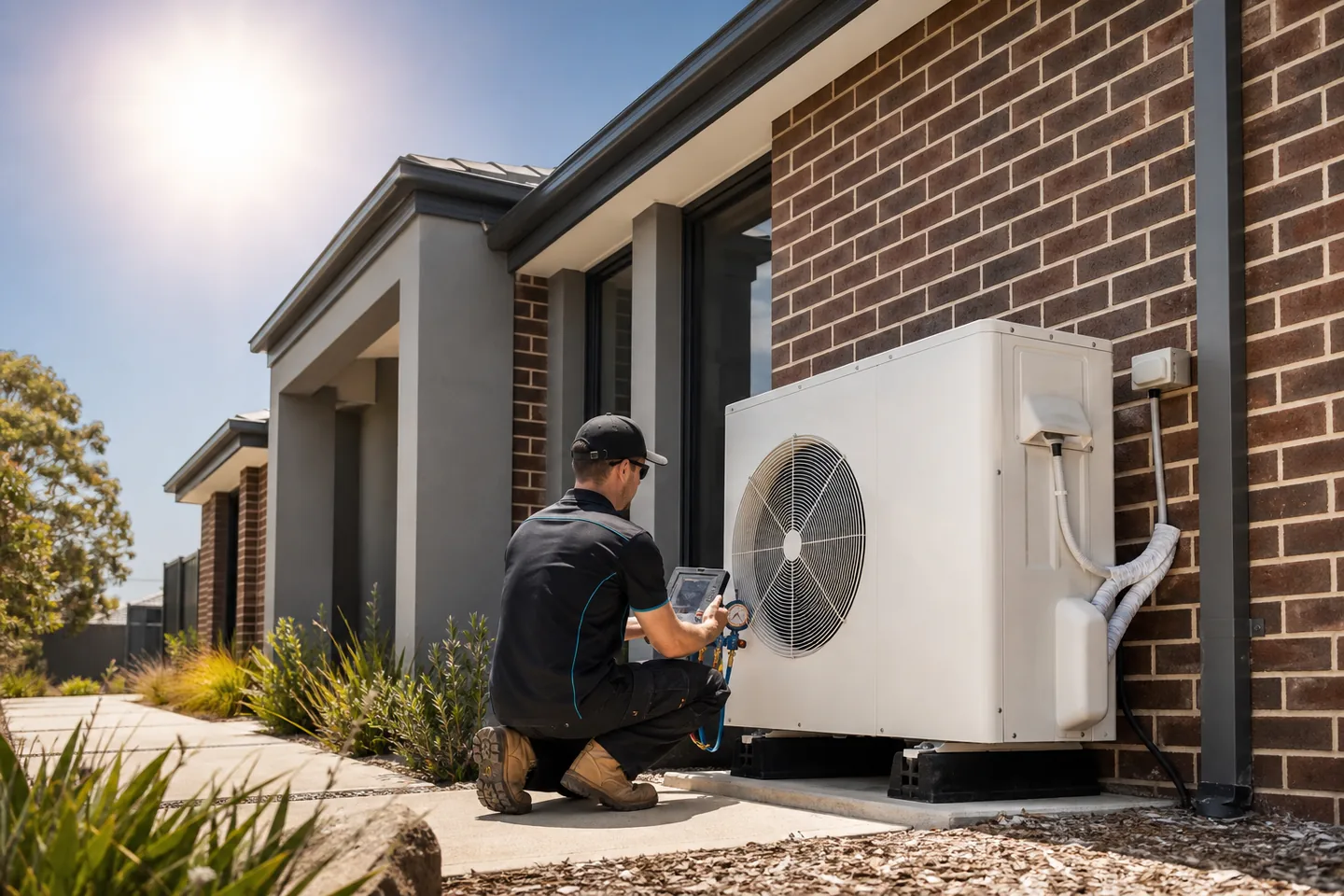
ActronAir designs and tests its ducted systems for Australian conditions. The Advance range publishes an operating window from -15°C to 54°C, which gives it a clear specification for Melbourne’s cold mornings and hot summer runs. Its other advantage is control: Advance with NEO supports individual zone temperatures, up to 8 zones and 16 sensing points. For a larger home with rooms used at different times, that is more useful than a single hallway thermostat.
The case for Daikin
Daikin brings a wider wall-split choice, from Lite and Cora through to Zena, Alira X and XL. Its Australian split range carries Sensitive Choice approval, with Streamer technology on selected models. On the ducted side, Premium Inverter spans 7.1 to 24.0 kW, selected indoor units are Australian Made certified, and continuous cooling operation is published up to 50°C ambient. Daikin AirHub is available in 4-zone and 8-zone versions.
ActronAir Advance vs Daikin Premium Inverter
For a whole-home quote, this is the comparison that matters. ActronAir Advance and Daikin Premium Inverter are both serious ducted systems, but they start from different places. Advance puts its own controls and individual zoning at the centre of the system. Daikin offers a broader capacity ladder, including smaller homes that do not need a 13 kW unit.
| Detail | ActronAir Advance | Daikin Premium Inverter |
|---|---|---|
| Published capacities | 13.0 to 25.0 kW, depending on electrical phase | 7.1 to 24.0 kW |
| Published temperature limit | Operating range from -15°C to 54°C | Continuous cooling operation up to 50°C ambient |
| Zoning | NEO individual temperature control on Advance, up to 8 zones and 16 sensors | Daikin AirHub in 4-zone or 8-zone versions |
| Australian manufacturing | Advance is designed and manufactured in Australia | Selected ducted indoor units are Australian Made certified |
| Domestic warranty | 5 years | 5 years parts and labour |
Those temperature figures are operating limits, not a promise that any system will deliver its nameplate capacity in every house at that temperature. Glass, insulation, duct losses and system selection still decide whether the back rooms hold temperature on a hot afternoon. A proper quote needs a room-by-room load, not a capacity picked from floor area alone.
ActronAir gets our first look when a larger house needs genuinely independent rooms. With Advance and NEO, the system can use sensors in the occupied zones instead of judging the whole home from one controller in a hallway. Daikin makes more sense when the required capacity falls below the Advance range, roof space is tight, or the owner wants a familiar ducted platform with a wide choice of controls.
Specifications checked against the current ActronAir Advance, ActronAir NEO and Daikin Premium Inverter pages on 24 July 2026.
What a useful ducted quote should show
Two totals at the bottom of a page are not a like-for-like comparison.
Ask both installers to write down the exact indoor and outdoor model numbers, the heating and cooling design load, and the number of zones and room sensors. The quote should also state where the return-air grille and outdoor unit will sit, whether switchboard work is included, and how the indoor unit can be reached for servicing. If one quote includes eight sensors and the other has four basic on-off zones, the price difference is not the brand.
For a Melbourne home replacing gas ducted heating, have the Victorian Energy Upgrades incentive shown as a separate line. Eligible products and certificate values change. Keeping the incentive separate lets you compare the actual equipment and installation price before the rebate.
One more thing: do not pay for a clever zoning controller and then group the home into a single day zone and night zone. Room sensors are most useful where occupancy changes through the day, such as a home office, nursery or west-facing bedroom. The duct design must still carry the minimum airflow the unit needs when only one or two zones are open.
Which should you choose?
- Ducted system for a larger or sun exposed home: Compare ActronAir Advance with Daikin Premium Inverter, including the exact zoning and sensor design.
- Wall splits for bedrooms and living areas: Daikin’s range gives you more choices at every price point.
- Asthma or allergies: Daikin.
- Buying on summer performance alone: ActronAir.
Whichever way you lean, eligible reverse cycle systems from both brands can attract Victorian Energy Upgrades rebates. See our full ActronAir and Daikin pages, or compare every brand we install on our air conditioning brands guide.
Running costs in a Melbourne winter
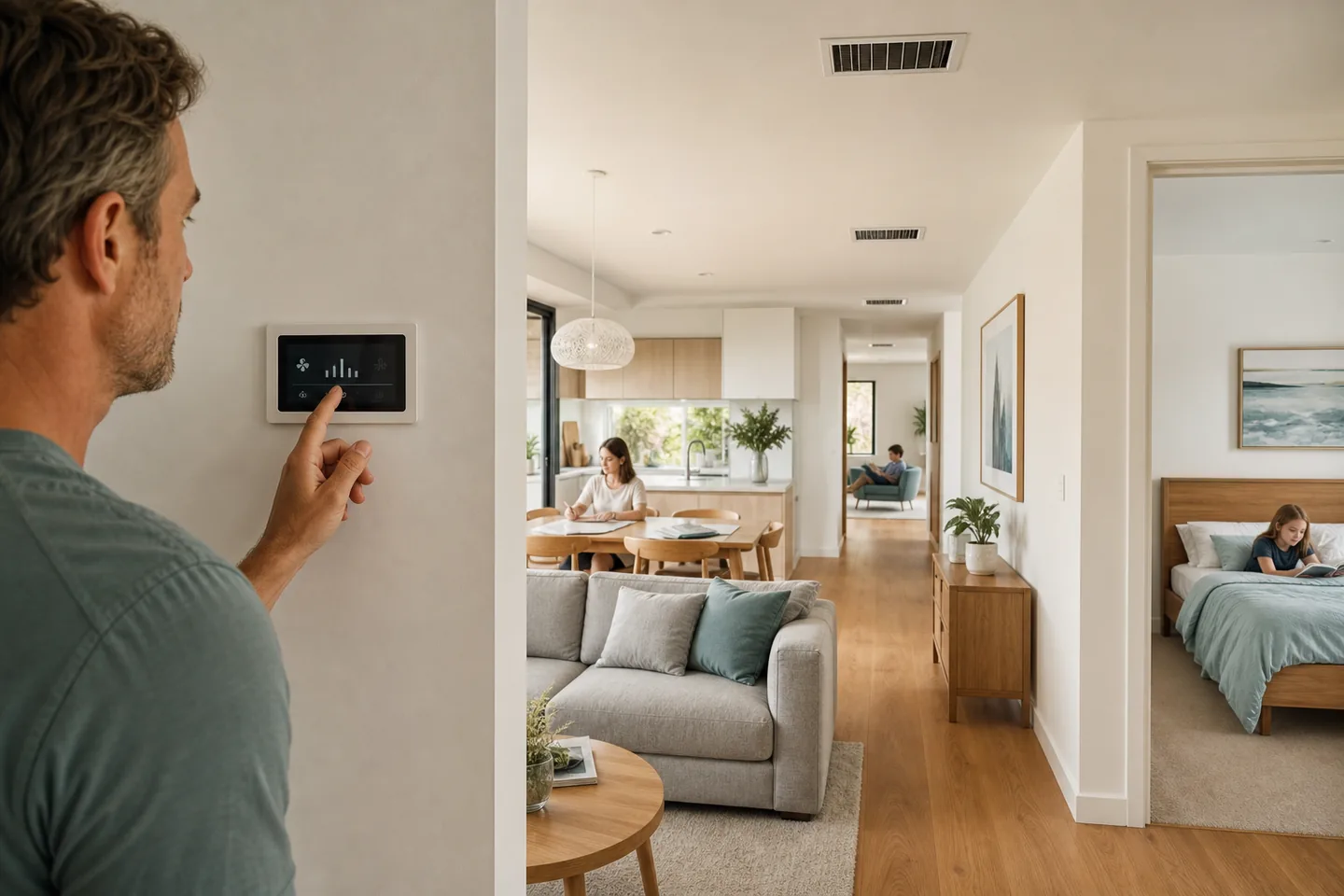
Both brands are reverse cycle, so the winter heating question matters as much as summer cooling in Melbourne. Correctly sized, either brand heats efficiently, and the running cost gap between them is smaller than the gap between a right sized and a wrong sized system. Where the brands do separate is zoning: in a larger home, ActronAir’s room by room control means you are not paying to heat empty bedrooms all evening, and that shows up on the bill. in a smaller home running one or two wall splits, the brands cost much the same to run and the decision comes down to the other factors on this page.
What we see in the field
On a run of hot days, we look first at whether the selected unit covers the calculated load at the design temperature and whether the ducts can move that air to the far rooms. ActronAir Advance publishes a wider operating window, while Daikin Premium Inverter publishes continuous cooling up to 50°C ambient. Neither figure rescues an undersized unit or a poor duct design. If you are also weighing the other premium Japanese name, our Daikin vs Mitsubishi Electric comparison covers that matchup.
Frequently asked questions
Is ActronAir as good as Daikin?
Yes, in the areas it focuses on. ActronAir is engineered and tested for Australian conditions and is particularly strong in ducted systems, where its zoning is class leading. Daikin has the wider overall range and leads on air quality technology. For a ducted system in a hot exposed home, ActronAir is a genuine first pick; for wall splits and air purification, Daikin has the edge.
Is ActronAir Australian made?
ActronAir has designed and engineered air conditioners for Australian conditions for more than 40 years. Its current Advance ducted range is designed and manufactured in Australia and publishes an operating range from -15°C to 54°C.
Which handles extreme heat better?
ActronAir Advance publishes the wider operating range, from -15°C to 54°C. Daikin Premium Inverter publishes continuous cooling operation up to 50°C ambient. These are operating limits, so the room-by-room load and duct design still decide performance in a heatwave.
Which is better for ducted zoning?
ActronAir Advance with NEO supports individual room temperatures, up to 8 zones and 16 sensing points. Daikin AirHub is available in 4-zone and 8-zone versions. Compare the number of sensors and the airflow design on the quotes, not just the controller screens.
Which is cheaper, ActronAir or Daikin?
Wall splits are similar, around $2,000 to $2,600 installed for a 2.5 kW unit from either brand. For whole home ducted, Daikin typically starts from around $12,000 and ActronAir from around $13,000, with the gap reflecting ActronAir’s zoning hardware. Get both quoted for your home before deciding.
Torn between the two? Get both quoted.
We will quote the best fit ActronAir and Daikin options for your home side by side, sized properly with a free on-site assessment.
