


Daikin and Mitsubishi Electric are the two brands Melbourne buyers compare most, and for good reason: they are the premium Japanese names in air conditioning. We install and service both every week, and as an accredited Mitsubishi Electric Diamond Dealer that also installs the full Daikin range, we do not have a horse in this race. Here is the honest comparison we give our own customers.
The quick answer
Both brands are credible premium choices. Choose Mitsubishi Electric when low bedroom noise and a compact indoor unit matter most. Choose Daikin when filtration is the priority or you want the widest wall-split range. For ducted air conditioning, roof space, capacity and zoning design matter more than the badge, so compare the exact models rather than two brand names.
Daikin vs Mitsubishi Electric at a glance
| Daikin | Mitsubishi Electric | |
|---|---|---|
| Reputation | World’s largest air conditioning manufacturer | Consistently among the most reliable brands in Australia |
| Quiet operation | Small Zena and Alira X models from 19 decibels | MSZ-AP25 from 18 decibels in heating Quiet Mode |
| Air quality | National Asthma Council approved, active purification on premium models | Quality filtration on all models |
| Wall split range | Lite, Cora, Zena, Alira X, XL | MSZ-AP, designer MSZ-LN, slimline MSZ-EF |
| Ducted | Selected ducted indoor units are Australian Made certified; AirHub zoning available | PEAD-M series, proven and quiet |
| Warranty | 5 year manufacturer warranty | 5 year parts and labour warranty |
| Installed price, 2.5 kW split | Around $2,000 to $2,600 | Around $1,900 to $2,400 |
| Ducted whole home | From around $12,000 | From around $12,000 |
Where Mitsubishi Electric wins
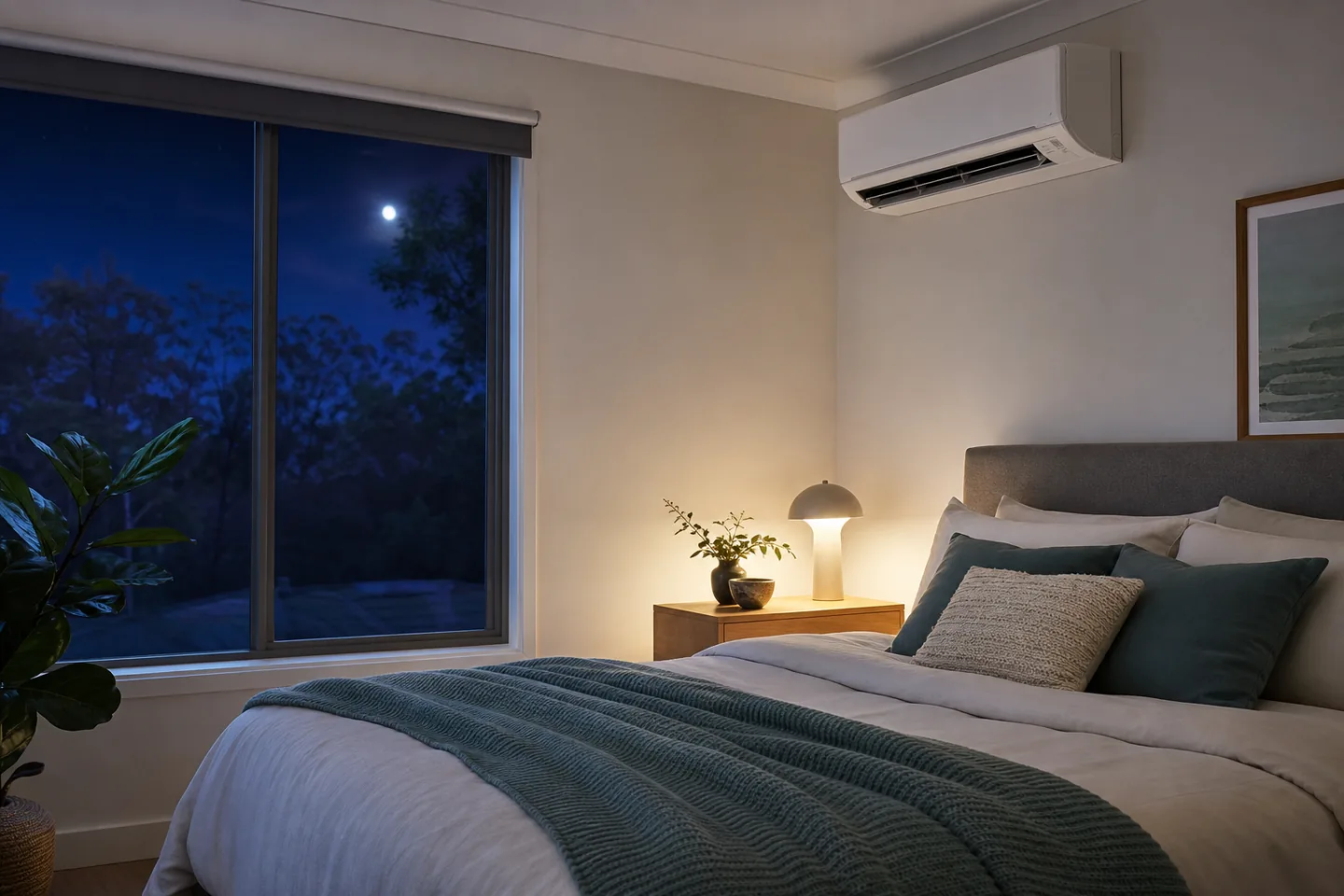
Bedrooms and quiet living areas are Mitsubishi Electric territory. The MSZ-AP25 reaches 18 dB in heating Quiet Mode, and Mitsubishi Electric stocks spare parts through Australian distributors. Buying through an accredited Diamond Dealer also means the design and installation are handled by a dealer trained for the range. The Australian residential product warranty is 5 years parts and labour.
Mitsubishi Electric also tends to land slightly cheaper at the entry level, with 2.5 kW wall splits from around $1,900 installed.
Where Daikin wins
Daikin’s current Australian wall-split range covers Lite, Cora, Zena, Alira X and XL. If air quality matters in your household, Daikin has the clearer advantage: its split systems carry Sensitive Choice approval, while selected Zena and Alira X models add Streamer technology.
For whole-home comfort, selected Daikin ducted indoor units are Australian Made certified. Daikin AirHub is available in 4-zone and 8-zone versions, allowing the design to separate occupied rooms instead of conditioning the whole house at once.
Daikin vs Mitsubishi Electric split systems
This is where the comparison gets specific. The model on the quote matters more than the logo.
| Detail | Daikin | Mitsubishi Electric |
|---|---|---|
| Current wall-split families | Lite, Cora, Zena, Alira X and XL | MSZ-AP, MSZ-EF and MSZ-LN |
| Low-noise example | Small Zena and Alira X models reach 19 dB | MSZ-AP25 reaches 18 dB in heating Quiet Mode |
| Air-quality option | Sensitive Choice approval across Daikin splits; Streamer on selected models | Plasma Quad Plus on MSZ-LN; Plasma Quad Connect is optional on MSZ-AP |
| Wi-Fi | Included or available depending on model | Built into newer MSZ-AP stock; confirm the exact model when comparing older stock |
| Domestic warranty | 5 years parts and labour | 5 years parts and labour |
For a bedroom, our short list normally starts with the Mitsubishi Electric MSZ-AP. Its low fan setting is quiet, the range runs from small bedrooms to larger living areas, and Night Mode deals with the light and control sounds as well as outdoor-unit noise. But the 18 dB figure belongs to the AP25 in heating mode. It should not be applied to every capacity and every setting.
Daikin earns the closer look in a household where filtration is the deciding factor. Its Australian split range carries Sensitive Choice approval, and selected Zena and Alira X models add Streamer technology. That does not turn an air conditioner into a medical device, and the filters still need cleaning. It does give the Daikin quote a clear point of difference.
Model details checked against Mitsubishi Electric Australia’s current MSZ-AP page and Daikin Australia’s heating and cooling guide on 24 July 2026.
Daikin vs Mitsubishi Electric ducted air conditioning
Daikin has the broader single-range capacity spread. Premium Inverter runs from 7.1 to 24.0 kW, and selected Daikin ducted indoor units carry Australian Made certification. Mitsubishi Electric approaches the same market with several ducted families. The low-profile PEAD-M runs from 5.0 to 14.0 kW and is only 250 mm high, which can settle the argument in a shallow Melbourne roof. Larger PEA-M systems extend to 24.5 kW.
So which ducted brand wins? The one that fits the roof and matches the measured load without a poor compromise.
Compare the indoor-unit dimensions, service clearances, external static pressure used for the duct design, controller, zone sensors and outdoor sound data. A cheaper quote can simply contain fewer sensors, smaller ductwork or no allowance for electrical work. Ask for those items in writing before treating the difference as a Daikin versus Mitsubishi Electric price gap.
Ducted dimensions and capacities checked against the current Mitsubishi Electric PEAD-M and PEA-M pages and the Daikin Premium Inverter page on 24 July 2026.
Mitsubishi Electric is not Mitsubishi Heavy Industries
Search results often shorten both companies to “Mitsubishi”, but they are separate manufacturers with different products, dealer networks and warranty support. This article compares Daikin with Mitsubishi Electric, including the MSZ-AP, MSZ-LN and PEAD-M ranges. It does not compare Daikin with Mitsubishi Heavy Industries.
Check the full manufacturer name and model number on every quote. A review for a Mitsubishi Heavy Industries Avanti or Bronte does not describe a Mitsubishi Electric MSZ-AP, even when a search result groups them together.
Price comparison in Melbourne
Installed prices for the two brands overlap heavily. As a guide from our own recent Melbourne installs: a 2.5 kW wall split runs around $1,900 to $2,400 for Mitsubishi Electric and $2,000 to $2,600 for Daikin. Mid size living area units land between $2,800 and $3,700 for either brand, and whole home ducted reverse cycle starts from around $12,000 for both, depending on home size and zoning. Eligible reverse cycle systems from either brand can also attract Victorian Energy Upgrades rebates, particularly when replacing an old gas heater.
Which should you choose?
Our honest rule of thumb after installing hundreds of both:
- Quiet bedrooms on a sensible budget: Mitsubishi Electric MSZ-AP.
- Asthma or allergies in the household: Daikin Zena or Alira X.
- Whole home ducted with room by room zoning: Daikin with a properly designed AirHub setup, or a low-profile Mitsubishi Electric PEAD-M where roof space is tight.
- Longest possible warranty cover: Mitsubishi Electric through a Diamond Dealer.
- Everything else: get both quoted for your home and compare like for like. The better price on the right capacity is the right answer.
Still weighing it up? See our full Daikin and Mitsubishi Electric pages, or compare every option on our air conditioning brands guide. Weighing an Australian made ducted alternative instead? See our ActronAir vs Daikin comparison.
Frequently asked questions
Is Daikin better than Mitsubishi Electric?
For bedrooms, we normally start with Mitsubishi Electric MSZ-AP because the AP25 reaches 18 dB in heating Quiet Mode. For filtration, Daikin gets the first look because its Australian split range carries Sensitive Choice approval and selected models add Streamer technology. Both brands provide a 5-year domestic parts and labour warranty.
Which is quieter, Daikin or Mitsubishi Electric?
The Mitsubishi Electric MSZ-AP25 reaches 18 dB in heating Quiet Mode. Small Daikin Zena and Alira X models reach 19 dB. Those figures belong to specific capacities and settings, so compare the sound data for the exact model on each quote.
Which is cheaper to run?
Both brands sit at the efficient end of the market and a correctly sized unit from either will cost a similar amount to run. Sizing matters far more than brand here, which is why we confirm capacity with a free on-site assessment before you buy.
Which brand is better for asthma and allergies?
Daikin has the edge for air quality. Its split systems are approved by the National Asthma Council Australia under the Sensitive Choice program, and models like the Alira X add active air purification.
Which is better for ducted air conditioning?
Both make strong ducted reverse-cycle systems. Selected Daikin ducted indoor units are Australian Made certified and can use Daikin AirHub zoning. Mitsubishi Electric PEAD-M units are only 250 mm high, which is useful in a shallow roof. The deciding factors are the measured load, service access, zoning design and exact model price.
Want a like for like quote on both brands?
Tell us the rooms you want conditioned and we will quote the best fit Daikin and Mitsubishi Electric options side by side, with honest advice on which we would pick for your home.
