



Use cool mode when the room is hot. Use dry mode when the room is not very hot but feels sticky and damp. Dry mode runs the air conditioner gently, with a slow fan, so moisture comes out of the air without the temperature dropping much.
That is the short answer, and it covers most days. The longer one matters because the two modes get mixed up all the time. People run dry mode on a 36 degree afternoon and wonder why the lounge is still hot. Others run cool mode on a muggy, overcast day in March, end up cold, and the room still feels clammy.
This guide explains what the droplet button actually does, how to pick the mode for the weather in front of you, and when neither is the right answer.
What Dry Mode Actually Does Inside the Unit
Every reverse cycle air conditioner removes some moisture when it cools. Warm room air passes over the cold indoor coil, water condenses on it like on a cold glass, and that water runs out through the drain. Cool mode does this as a side effect. Dry mode makes it the main job.
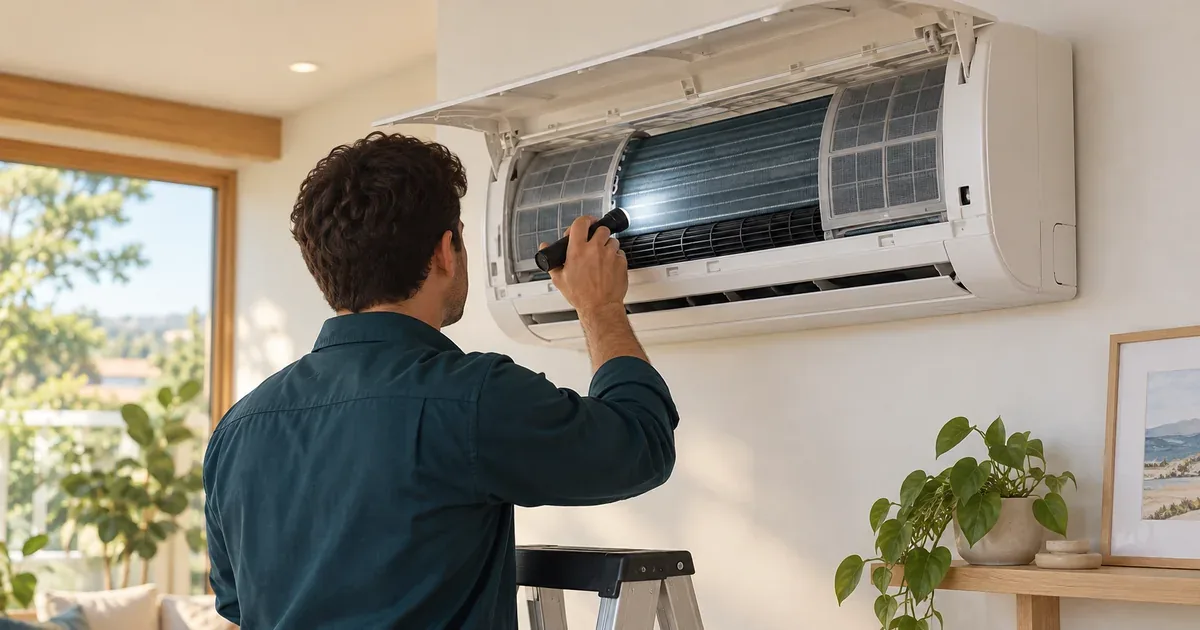
To do that, the unit slows the fan right down and runs the compressor at low output or in short bursts. Air moves slowly across a cold coil, so more of its water condenses and less of its heat gets pulled out. ActronAir describes dry mode as removing excess humidity “without significantly reducing the temperature”.
A few things follow from that, and they catch people out:
- On many models the fan speed is locked to low in dry mode. Pressing the fan button does nothing. That is normal.
- Some models let you set a temperature in dry mode and some do not. One Daikin operation manual we checked runs the unit in cooling first if the room is more than 2 degrees above the set temperature, then switches to dry once it is close.
- It is not a dehumidifier. Daikin says plainly that dry mode “does not suck all the moisture from the room”. It takes the edge off. It will not dry out a damp house.
Look for a water droplet symbol on the remote or the wall controller. Exactly how your unit behaves in dry mode is in its operation manual, and it differs between brands and even between model years.
Hot or Just Sticky? Picking the Mode for the Day
Melbourne summers are mostly dry heat. A northerly at 38 degrees is hot, but the air itself is not wet. Then every so often the weather turns heavy and humid, often before a storm or during a run of warm, overcast days, and that is when the choice between the two buttons actually matters.

| What the day feels like | Mode to use | Why |
|---|---|---|
| Hot and dry, a summer northerly | Cool | The problem is heat. Dry mode moves too little air to keep up |
| Hot and sticky, thunderstorm weather | Cool, then dry | Bring the temperature down first. Switch to dry once the room is comfortable but still feels damp |
| Mild but muggy, the low to mid 20s | Dry | The room is not hot, it is clammy. This is what dry mode is for |
| Warm humid night, can’t sleep | Dry, or cool set a little higher | Either removes the stickiness. Dry mode’s slow fan is also quieter |
| Cold and damp, winter condensation on windows | Neither dry nor cool | Both remove heat from a room that is already cold. See the winter section below |
The trick with the middle rows is that humidity is what makes 25 degrees feel worse than 25 degrees. Sweat cannot evaporate into wet air, so you feel warmer than the thermometer says. Take some water out of the air and the same temperature feels fine, which is why dry mode can be all you need on those days.
On the hotter days, our guide to what temperature to set your air conditioner in summer covers the setting for heatwaves, nights and the cool change.
Does Dry Mode Use Less Power Than Cool Mode?
Usually a bit less, because the compressor works at lower output and the fan runs slowly. ActronAir notes that dry mode can help save on electricity, as the system does not have to work as hard to cool the air.
We will not put a percentage on it, and you should be wary of anyone who does. The saving depends on the model, the size of the room, how humid it is, and what you would otherwise have set cool mode to. A unit in dry mode on a muggy day may run for hours. The same unit on cool at 24 degrees might reach temperature and idle.
If you want a real answer for your home, many newer units show energy use on the controller or in their app. Run each mode on similar days and compare. For a broader view of what heating and cooling costs to run, try our running cost calculator.
When Dry Mode Is the Wrong Button
Dry mode has a narrow job, and outside it, it either does nothing or does the wrong thing.
On a Properly Hot Day
The slow fan and low output that make dry mode good at removing moisture make it poor at removing heat. If the room is hot and getting hotter, use cool. ActronAir’s own advice is that dry mode should supplement cooling, not replace it.
When the House Is Cold and Damp
Winter damp is the case people most often ask us about, and dry mode is the wrong tool. It cools the air while drying it, so in a cold bedroom it makes the room colder. Warming the room in heat mode lowers the relative humidity, because warmer air can hold more water, and short bursts of fresh air help clear what the household adds by cooking, showering and drying clothes. For a room that stays damp all winter, a dedicated dehumidifier is the better appliance.
When the Air Is Already Dry
On a dry day there is little moisture to remove. ActronAir points out that dry mode will not have a significant impact when humidity is already low. You are just running a slow, slightly cool fan.
Unit Not Coping With the Humid Days?
If the room stays clammy in dry mode, or cool mode cannot hold the temperature, the system may need a service or may be the wrong size for the room. Tell us what it is doing and we can take a look.
What a Damp Room Is Telling You
The US Environmental Protection Agency’s mould guidance recommends keeping indoor humidity below 60 percent, ideally between 30 and 50 percent, and lists air conditioners and dehumidifiers as ways to get there. You cannot judge that by feel. A cheap digital hygrometer from a hardware store tells you, and it settles the dry or cool question better than any rule of thumb.
Signs the room is regularly too damp:
- Condensation on the inside of windows in the morning
- A musty smell in wardrobes or one particular room
- Black spots on ceilings, window frames or the silicone in the bathroom
- Clothes and towels that take a long time to dry inside
Two things to keep an eye on when you use dry mode a lot. First, it produces more water than you might expect, and all of it has to leave through the drain line. If water starts dripping from the indoor unit, the drain is the usual suspect, and our guide to an air conditioner leaking water inside walks through it. Second, a coil that stays wet for long periods can start to smell. If the air from the unit smells stale, read why an air conditioner smells musty, and check whether your model has a setting that runs the fan after cooling to dry the coil.
A clean system handles humidity far better than a dirty one, because a clogged filter and coil slow the airflow that dry mode depends on. A standard split system service with us is from $150, and the guide to how often to service an air conditioner covers the timing.
Questions About Dry Mode and Cool Mode
Can I set a temperature in dry mode?
It depends on the model. Some ignore the set temperature in dry mode, some use it as a guide and switch between cooling and drying around it. Your operation manual says which. Either way, dry mode is not designed to hold the room at a precise temperature.
Is it okay to leave dry mode on overnight?
On a warm, humid night it is a reasonable choice, since the slow fan is quiet and the room does not get much colder. Keep an eye on how the room feels by morning. If it is still warm, cool mode set a couple of degrees higher than your daytime setting may sleep better.
Does dry mode work in winter?
It is not the right mode for a cold room, because it cools while it dries. For winter damp, heat the room, ventilate briefly after showers and cooking, and consider a dehumidifier for rooms that stay damp.
Is dry mode the same as a dehumidifier?
No. A dehumidifier is built to pull water out of the air whatever the temperature, and it does not cool the room. An air conditioner’s dry mode removes some moisture while cooling a little. It is useful on muggy days, but Daikin notes it does not remove all the moisture from a room.
Why does my air conditioner drip more in dry mode?
Dry mode is designed to pull water out of the air, so more water goes down the drain line. The water should leave outside. If it drips from the indoor unit, the drain is likely blocked or the unit is not level, and it needs a technician to look at it.
If your split system is not keeping up at all, in either mode, start with why an air conditioner stops cooling. And if a damp bedroom is your real problem, our bedroom air purifier guide covers what each appliance can and cannot do.