



If your air conditioner smells musty, cleaning the removable filters is a sensible first check. But if the smell comes back, the source may be deeper inside the indoor unit, or elsewhere in the room. A clean filter does not prove the whole system is clean.
This guide is for a home split system or ducted reverse cycle air conditioner in Australia. Start with the safety check below, then use the smell and when it appears to decide what to do next. You do not need to identify a fault by nose before asking for help.
What Does the Smell Tell You?
The description helps a technician decide what to inspect. It does not identify a particular contaminant or failed part. Use this table to choose your next action, rather than to diagnose the system.
| What you notice | What to note | Next action |
|---|---|---|
| Musty or damp | Only at start-up, throughout cooling, or also with the unit off? | Check the room and accessible filters. Arrange inspection if it persists. |
| Sour or like vinegar | Did it start after cleaning? Which products were used? | Record the timing. Avoid adding another cleaner to mask it. |
| Burning or hot plastic | Any smoke, unusual noise or a tripped breaker? | Stop using it. Do not reset it repeatedly to test it. |
| Rotten eggs or suspected gas | Keep away from the affected area. | Follow the gas emergency advice above. Do not operate switches. |
For a persistent unexplained smell, book air conditioning servicing in Melbourne. If the unit also trips, stops or makes an abnormal noise, describe those symptoms when requesting air conditioning repairs.
Why Your Air Conditioner Smells Musty After Cleaning
First, establish what “cleaned” means. Washing two mesh filters and wiping the casing leaves other components untouched. Before paying for the same job again, ask whether the previous visit included the indoor coil, fan and condensate drainage.
The indoor coil cools the passing air. Moisture condenses on it and collects in a tray before draining away. The fan moves that air back into the room. These parts sit beyond the removable filters, so a filter-only clean cannot tell you their condition.
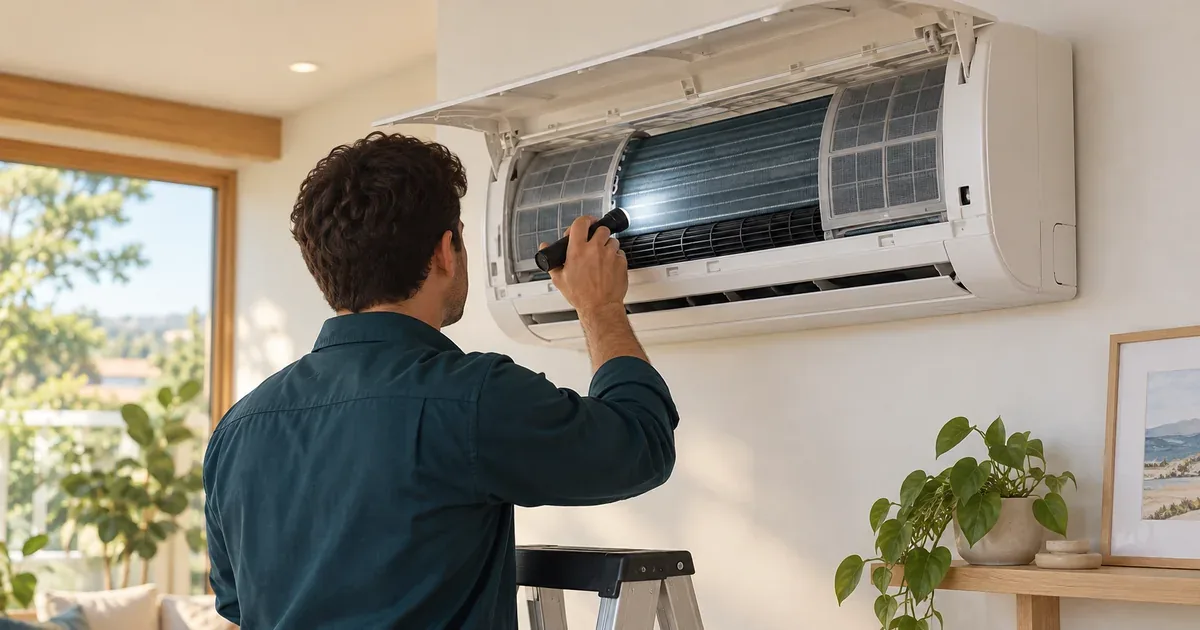
A useful service request is: “The filters have been cleaned, but the smell returns when cooling starts. Please inspect the internal air path and drainage, and tell me what needs attention.” That gives the visit a clear purpose without prescribing a chemical treatment before anyone has inspected the unit.
If you already paid for internal cleaning, contact that provider with the job date and a description of what changed. Ask what was cleaned, what was checked and whether they recorded the condition before and afterwards. A recurring smell deserves a follow-up explanation before another identical treatment.
Water leaking indoors is a separate symptom worth mentioning. Our air conditioner leaking water guide explains drainage and icing checks. If airflow or cooling has also dropped, use the air conditioner not cooling guide to describe that problem too.
What You Can Check Without Opening the Unit
Keep home maintenance to the parts your operating manual identifies as user-accessible. Skip the filter check if the unit is too high to reach safely, the casing is damaged or you cannot identify how to isolate the power.
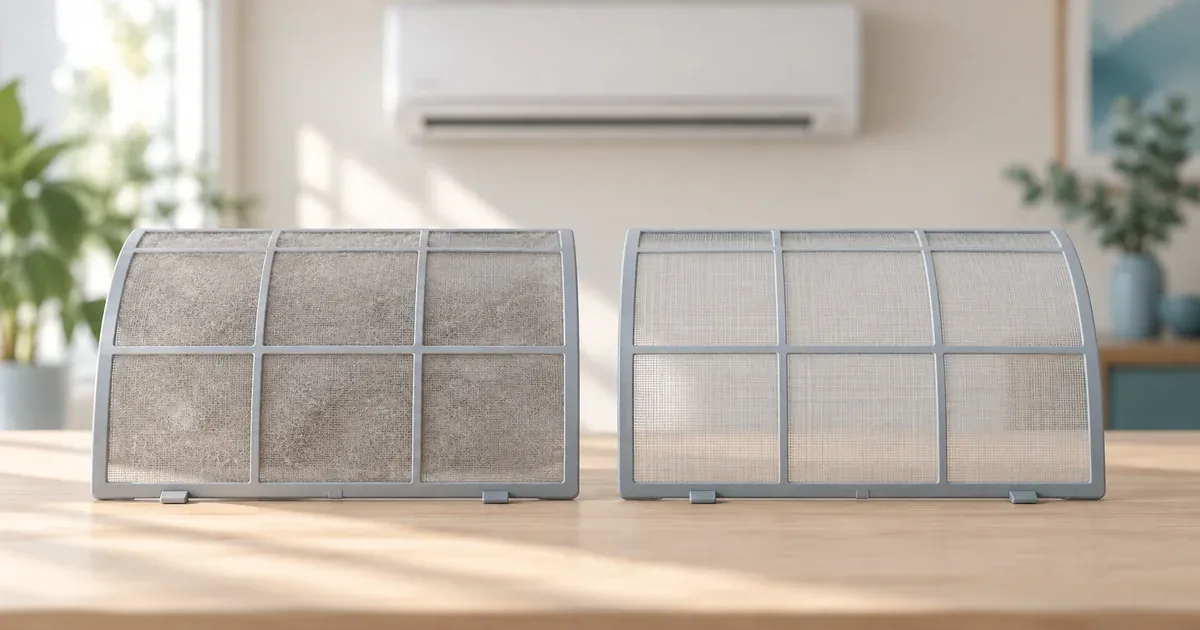
- With the system off, notice whether the smell is already present in the room. Check nearby soft furnishings, bins and visible damp patches. Record what you find; do not assume every smell carried by airflow originates inside the unit.
- Find the operating manual using the model number. Switch off and isolate the system as instructed before touching its filters.
- Remove only the user-accessible filters. Follow the cleaning method for that filter type, and let washable filters dry as directed before refitting. Do not soak a specialist insert just because the larger mesh filter is washable.
- Refit everything correctly. If there were no warning signs and you choose to use the system again, note whether the original smell returns. If it does, stop repeating filter washes and arrange inspection.
Mitsubishi Electric’s MSZ-AP operating instructions distinguish user filter cleaning from internal cleaning, which they direct to a dealer. They also warn against unsuitable detergents and note that refrigerant may have no odour. A smell cannot confirm or rule out a refrigerant leak.
Do not spray bleach, vinegar, perfume or household disinfectant into the coil or outlet. Do not push a brush through the louvres or remove screwed covers. If the smell seems strongest deeper inside, that is useful information for the technician, not an instruction to reach further.
Record the Pattern Before Booking
“It smells bad” starts the conversation. The timing and location make it much more useful. Use observations you already have; you do not need to keep running a suspect unit to fill in this checklist.
- The brand and model, plus a photo of any displayed error code.
- Whether the smell appears at start-up, continues during operation or remains after switching off.
- The operating mode when you noticed it: cooling, heating, fan or an automatic cleaning cycle.
- Which indoor unit or rooms are affected.
- When filters were last cleaned, and whether a technician has cleaned inside the unit.
- Any water, reduced airflow, unusual noise or visible marks noticed without opening the casing.
For ducted reverse cycle, tell the technician whether one outlet smells or several do, and whether the smell is noticeable around the return air grille. Let them inspect the roof-space equipment. There is no need to climb into the roof to make the booking.
Evaporative cooling needs a different inspection. Tell the service provider if that is the system you have; it uses water and cooling pads rather than the indoor refrigeration arrangement described here. Our evaporative and refrigerated cooling comparison helps identify the difference.
What Should a Service for a Smelly Air Conditioner Include?
Ask for inspection of the odour complaint, with the proposed cleaning or repair explained before work begins. “Air conditioner service” alone does not tell you whether internal cleaning is included.
Ask the provider these questions:
- Will you inspect the indoor coil, fan, drain tray and drainage path?
- What cleaning is included, and what would need a separate quote?
- If you find a drainage or electrical fault, will you explain it before replacing parts?
- How will you check the result, and what should I do if the smell returns?
There is no single honest price for every odour complaint. The job could involve accessible filter maintenance, internal cleaning or a fault that needs repair. Use our air conditioner service cost calculator for an indicative Melbourne budget, then confirm the scope. An estimate for routine servicing is not automatically a quote for deep cleaning.
We would not recommend replacing an otherwise working air conditioner on smell alone. Establish the cause and compare the proposed work first. A new unit is an expensive way to discover that the source was elsewhere.
How Do You Stop the Smell Coming Back?
Follow your model’s filter-care instructions and deal with recurring moisture or drainage concerns. Set a reminder you will actually use, rather than waiting until the first hot afternoon to inspect the filters. Our air conditioner servicing frequency guide separates routine care from a professional visit.
Check whether your model has an internal drying or mould-prevention cycle. Daikin’s mould prevention guidance describes an after-run function on selected models. Follow the instructions for your exact unit; the feature and its behaviour differ between models. It is a maintenance aid, not proof that a persistent odour has been resolved.
If the room itself stays damp on muggy days, our guide to dry mode vs cool mode explains when dry mode helps and when it is the wrong setting.
Keep the service notes. If the same problem returns, a record of the mode, date and previous work is more useful than starting again with another spray.
For airborne dust in the room, our bedroom air purifier guide explains how filtration differs from cleaning the air conditioner.
Still Smelling Musty After Cleaning?
Tell us the model, when the smell appears and what has already been cleaned. Climate Control Solutions services residential air conditioning across Melbourne during business hours.
Questions About Air Conditioner Smells
Why does my air conditioner smell musty?
Moisture and dirt inside the system are possible sources, but the room itself also needs checking. Start with accessible filter maintenance from the operating manual. A persistent smell needs inspection, especially when filter cleaning has already made no difference.
Why does my air conditioner smell like vinegar?
A sour description does not identify the cause. Note when it happens, whether it began after cleaning and which products were used. Give those details to the service provider rather than treating the smell as proof of mould or a refrigerant leak.
Why does my air conditioner smell bad when turned on?
Start-up timing is a useful clue, but it does not identify a failed part. Record whether the smell disappears or continues, and mention any recent cleaning. A burning or suspected gas smell needs the immediate precautions at the top of this guide.
Why does my air conditioner still smell after cleaning?
Check what the cleaning covered. Filter cleaning leaves internal components uninspected. If internal cleaning was completed, ask the provider to revisit the complaint and explain what was checked before you pay for the same treatment again.