



Service an evaporative cooler once a year, in spring, before the first hot day. A service checks the cooling pads, water pump, float valve, drain and fan, then runs the system to confirm it cools properly. in Melbourne a routine service is indicatively $200 to $350 per visit.
A roof-mounted cooler sits idle from about March to November. Pads dry out, scale and leaves collect in the tank, and nobody finds out until the first 35 degree afternoon, when the air coming out of the ceiling is warm, weak or smells stale. That is the worst day to find a fault, because everyone else with a cooler is booking at the same time.
This guide explains what a service covers, the signs that your cooler needs one, what it costs and what you can safely check from the ground.
Why Service Your Evaporative Cooler Before the First Hot Day
An evaporative cooler works by pulling outside air through wet pads. If the pads are clogged, the pump is tired or the water is not spreading evenly, the air is not cooled properly, and the fan just pushes warm air through the house.
Winter is hard on these systems. Water left sitting in the tank or the pads over the cooler months can go stale and grow mould, pads can harden with scale, and valves can stick from months without use. Your owner’s manual lists the manufacturer’s own pre-season and end-of-season steps, and a service should follow them.
A spring service catches the slow problems while they are still cheap: a pad that has gone hard, a float valve that sticks, a drain that will not open. Found in October, that is a booked visit. Found in a January heatwave, it can mean several hot nights waiting for a technician.
What’s Included in an Evaporative Cooling Service
A typical service works through the roof unit from the water supply to the fan. The exact scope varies with the model and its condition, so ask what is covered when you book.
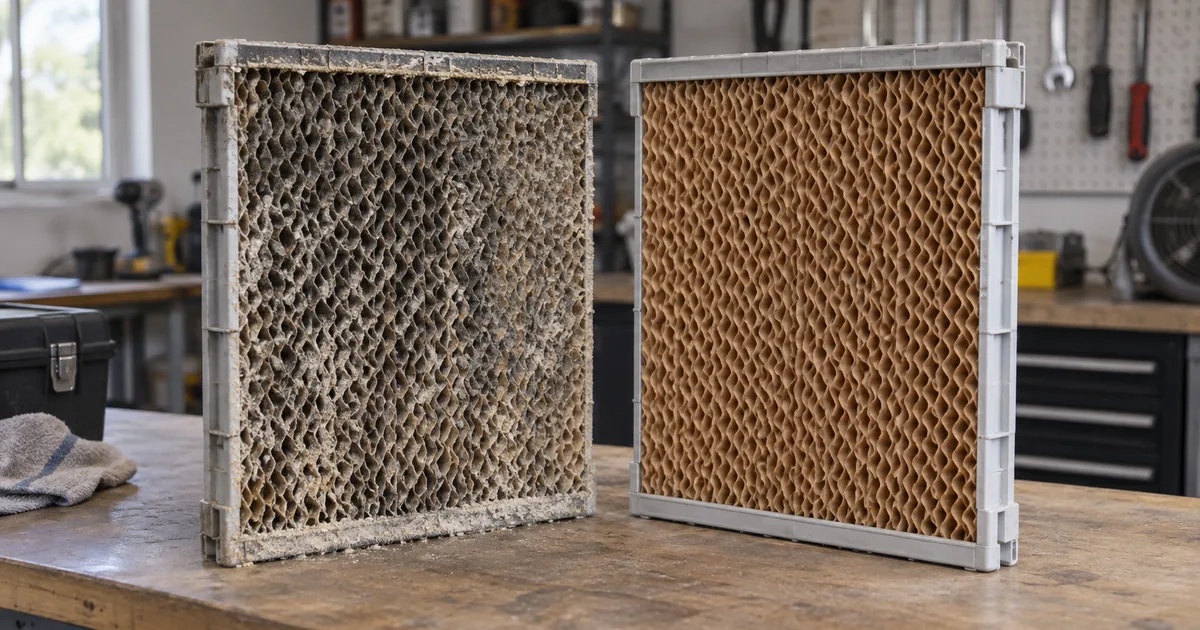
Inspecting and Cleaning the Cooling Pads
The pads do the cooling. The technician checks them for scale, dirt, dry patches and damage, cleans them where the pad type allows, and tells you if they are due for replacement. Pad life depends on the pad material and your water, so a replacement is quoted separately rather than assumed.
Checking the Water Pump and Distribution System
The pump lifts water from the tank and spreads it across the top of every pad. A weak pump or a blocked distribution channel leaves dry strips, and dry pad means warm air. The technician runs the pump and watches the water reach every pad evenly.
Inspecting the Water Supply, Drain and Float Valve
The float valve controls how much water enters the tank. If it sticks open the cooler overflows, and if it sticks shut the pads run dry. The drain valve empties the tank so water does not sit in it for months. Both are checked, along with the supply line and its fittings.
Checking the Fan, Motor and Airflow
The fan moves the cooled air down the ducts. The technician checks it for debris, wear and unusual noise, and checks that air is reaching the ceiling outlets.
Inspecting Electrical Components and Controls
The wall controller and the connections inside the roof unit are checked so the cooler starts, changes speed and switches between cool and fan modes as it should.
Checking for Leaks, Scale and Debris
Leaves, bird nests and mineral scale build up in the tank and around the pads over winter. Leaks around the cabinet are noted too, because water on the roof can end up on your ceiling.
Running the System After the Service
The last step is a full test: water flows, pads wet evenly, the fan runs at each speed and cool air reaches the rooms. You should hear what was found and anything that needs a quote.
7 Signs Your Evaporative Cooler Needs a Service
If you notice any of these, book a service before the weather turns. The table points to the likely cause and the next step, not a diagnosis.
| What you notice | Likely cause | What to do |
|---|---|---|
| Air is not cool | Dry or clogged pads, a weak pump or no water supply | Check the water tap is on, then book a service |
| Weak airflow | Blocked pads, fan problem or closed outlets | Check every ceiling outlet is open, then book a service |
| Musty or stale smell | Stagnant water or dirty pads | Book a service and mention when the smell appears |
| Water leaking or dripping | Float valve, overflow or a cabinet leak | Switch off, note where the water appears and book a service |
| Rattling, grinding or humming | Fan, motor or pump wear, or debris | Switch off and book a service |
| Cooler cuts out | Electrical, control or water level fault | Do not keep resetting it. Book a repair |
| Patchy cooling between rooms | Uneven water distribution or duct issue | Book a service and note which rooms are affected |
Book an Evaporative Cooling Service Before Summer
Tell us what you have noticed and roughly how old the system is. Climate Control Solutions services residential cooling across Melbourne during business hours.
How Often Should an Evaporative Cooler Be Serviced in Melbourne?
Once a year, before summer, is the sensible default for a Melbourne home. Your owner’s manual may set its own intervals for pads and other parts, so follow it where it differs.
- Book in September, October or early November, before the hot weather and the rush.
- Older systems and coolers that run most days through summer may need attention more often.
- Any of the warning signs above is a reason to book straight away rather than wait for the annual visit.
If you also run split systems or a ducted reverse cycle system, the timing advice in our guide to how often to service your air conditioner covers those.
How Much Does an Evaporative Cooling Service Cost in Melbourne?
A routine evaporative cooling service is indicatively $200 to $350 per visit in Melbourne. A deeper clean costs more. Parts such as new pads, a pump or a float valve are quoted separately if the service finds they are needed.
What moves the price:
- How easy the roof unit is to reach
- The condition of the pads and how much scale has built up
- Whether parts need replacing
- Whether the visit is a routine service or a repair for a fault
Before you accept a quote, ask what the service includes, whether pad cleaning or replacement is part of the price, and how parts are charged. The air conditioner service cost calculator gives an indicative figure for evaporative, split and ducted systems. If the cooler has already stopped working, our repairs team can diagnose it.
What You Can Safely Check Yourself
Keep your checks to the ground. The roof unit has a fan, water and mains power, and working on a roof is dangerous. Leave the cabinet and anything electrical to a technician.

- Check the water supply tap to the cooler is turned on.
- Make sure every ceiling outlet is open, and remove any outlet covers fitted for winter.
- Run the cooler on fan only first and listen for unusual noise.
- Switch to cool and give the pads a few minutes to wet before judging the air.
- Open a window or door in the rooms you are cooling. An evaporative cooler needs somewhere for the air to escape.
If the roof unit has a winter cover, its removal is part of the service rather than a ladder job for you. Your owner’s manual lists anything else the manufacturer treats as a homeowner task.
Questions About Evaporative Cooling Service
How often should evaporative cooling be serviced?
Once a year before summer suits most Melbourne homes, with extra visits for older or heavily used systems. Follow your owner’s manual where it sets different intervals for pads or other parts.
Why is my evaporative cooler blowing warm air?
Usually the pads are not getting wet. Check the water supply tap is on and give the pads a few minutes after switching to cool. If the air stays warm, the pump, float valve or pads need a technician to look at them.
Can dirty cooling pads affect performance?
Yes. Scale and dirt stop water spreading evenly and restrict airflow, so the air coming through is warmer and weaker. Pads can also hold stale water, which is one cause of a musty smell.
Does evaporative cooling use a lot of water?
It can use a significant amount over a summer. How much depends on the size of the unit, how hot and dry the day is, and the fan speed. Your owner’s manual may give figures for your model.
Is evaporative cooling effective in Melbourne’s humid weather?
It works best in hot, dry weather and loses effect on humid days, which Melbourne gets during some summer spells. On a humid day that is not very hot, running the fan without water, if your cooler has a fan only setting, can be the more comfortable choice. Our evaporative vs refrigerated cooling guide explains the trade-offs.
Thinking about the system itself rather than a service? Our page on evaporative cooling in Melbourne covers installation and replacement. If the cooled air smells musty after a service, our guide to musty air conditioner smells explains what to note for the technician.